Cumulative Impacts: The Coalition to End Sacrifice Zones
Campaign Overview
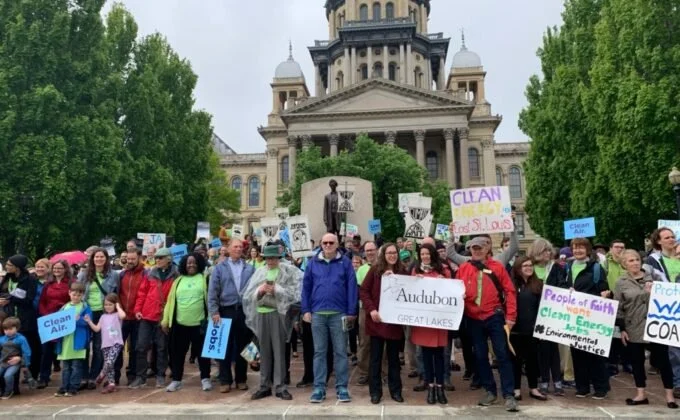
Frontline communities live with multiple sources of pollution in their neighborhoods decade after decade. Since 2022, our members have fought that accumulation through a proposed city ordinance, a county environmental justice policy framework , and a recently passed state law.
Status: Active
Led by: All CEJN member organizations, with coalition partners including the Illinois Environmental Council, the American Lung Association, Respiratory Health Association, Openlands, and the Sierra Club.
Scope: City, county, and state
The Problem
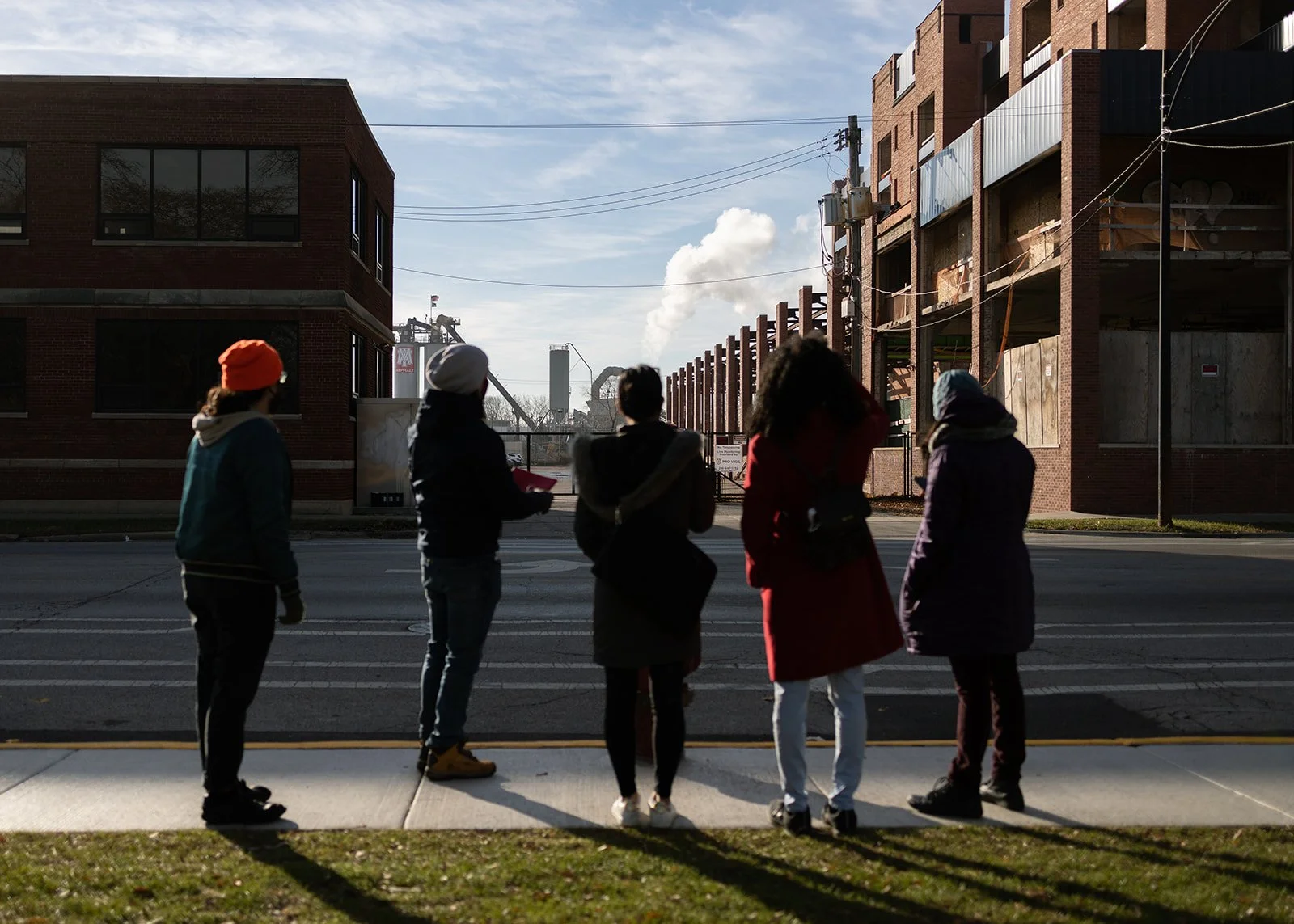
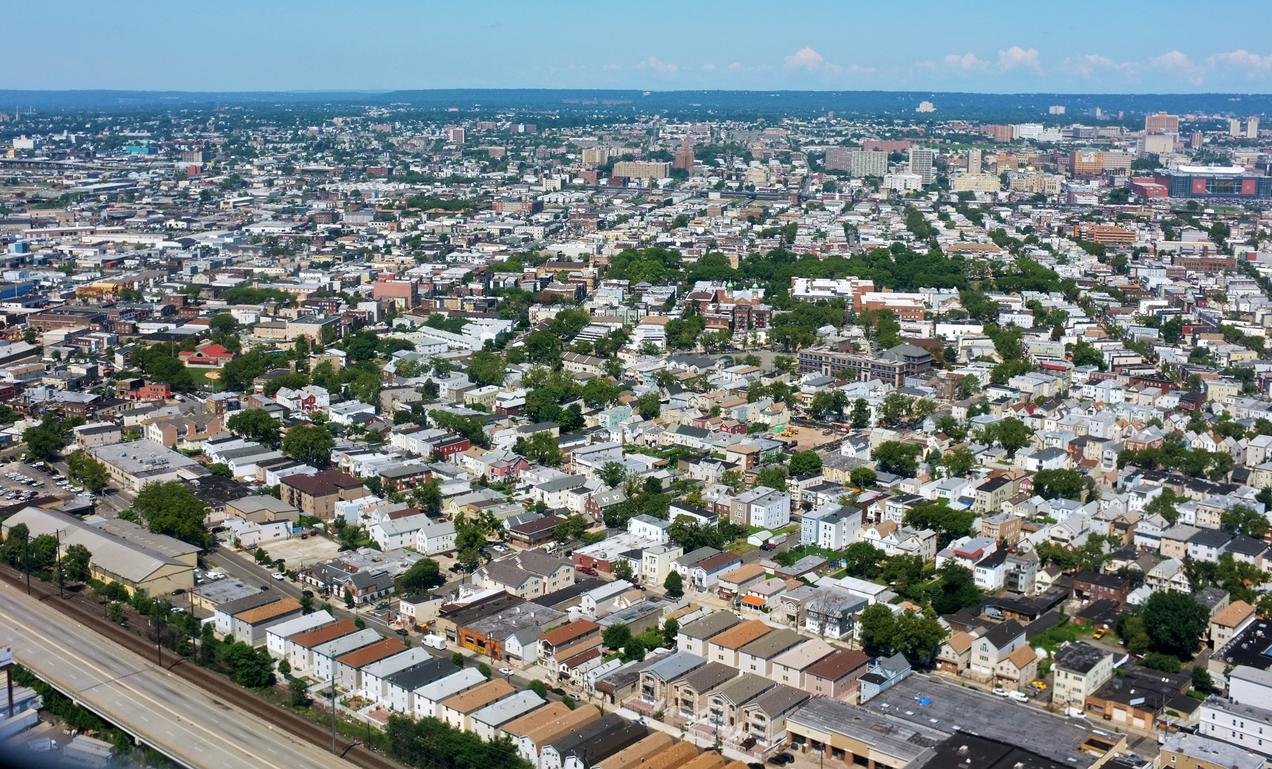
Cumulative impact is what happens when frontline communities have to live with multiple sources of environmental injustices in their neighborhoods. A scrap yard, a highway, a rail line, and an asphalt plant within a few blocks of each other. They usually live in older housing, with less access to grocery stores, thinner tree cover, and less money to move away from any of it.
Chicago's own cumulative impact assessment confirmed what residents have said for fifty years: pollution in this city is concentrated by race and by income, and it is concentrated here.
In 2022, our five-member organizations went public together with a commitment to fight that accumulation as frontline communities rather than as separate campaigns. That work now runs at three levels of government.
What this campaign would change
City: the Hazel M. Johnson Cumulative Impacts Ordinance
Hazel Johnson raised her family in Altgeld Gardens and started the environmental justice movement in this country by asking why so many of her neighbors were sick. The ordinance carrying her name would change how Chicago decides what gets built and where. It treats pollution as something that accumulates, which means a new industrial use gets weighed against everything the surrounding blocks already carry. It covers development broadly rather than air permits alone. It is awaiting City Council action.
County: the Cook County Environmental Justice Policy Framework
Cook County released its first ever Environmental Justice Policy Framework in January 2026 to address historical environmental inequities, pollution burdens, and community disinvestment, reaching communities the city ordinance cannot.
State: the Illinois Environmental Justice Permitting Bill, SB 3772
Illinois now has to weigh environmental justice when it issues air permits, using state indicators that identify communities already carrying a heavy load. The bill passed, and it is a starting point rather than a finish line. It covers air permits, not development at large.
Take action with one of our partners.
ALA: ALA: Stand up for healthy lungs and healthy communities - Contact your Alderperson today!
RHA: RHA: Support the Hazel M. Johnson Cumulative Impact Ordinance
Open Lands: Protect Chicago Communities from Toxic Pollution
Sierra Club: https://act.sierraclub.org/actions/illinois?actionid=ar0544398&id=70131000001iOuIAAU
Sign On Letter in Support of Hazel M. Johnson Cumulative Impacts Ordinance -
Join our coalition: Partnership Survey
Civic Engagement: Write public comments. Attend city council meetings and share a public comment to city council.
Related Programs