Chicago Community-Driven Air Quality Monitoring Network

Campaign Overview
Frontline communities disproportionately breathe dangerous polluted air, making residents sick, but the official data was too thin to prove it. Our members now run monitors in their own neighborhoods, and the readings are public.
Status: Active and ongoing. Monitors are running across the entire city of Chicago, with data available through public dashboards.
Led by: All CEJN member organizations, each operating monitors in their own service area.
Scope: Citywide
The Problem
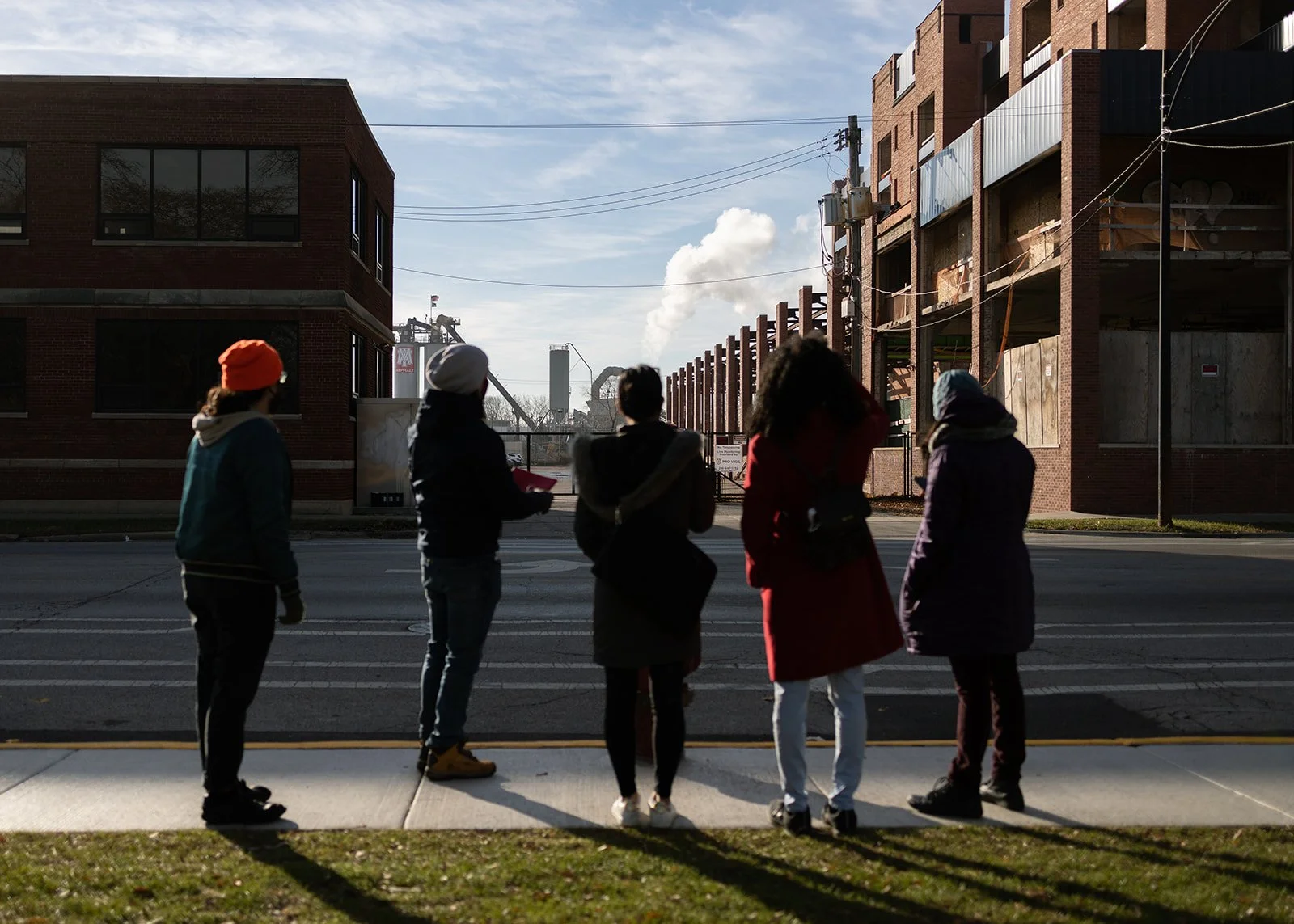
For years, residents on the South and West of Chicago described air pollution and their impact on their health. Children missed school because they suffered from asthma at higher rates. Residents kept their windows closed to avoid dust in their houses. And for years the answer was that the official monitoring network was too sparse to show anything wrong, because the nearest regulatory monitor was miles away and averaged over a whole region.
The absence of data was treated as the absence of harm.
What this campaign changed
Our member organizations run air monitors in their own neighborhoods, and the readings are public and this year they launched the largest air monitoring network in the nation and second largest in the world consisting of 277 air sensors collecting data on fine particulate matter (PM2.5) and nitrogen dioxide (NO2), providing air quality information for Chicago communities and residents. This network supplements the local air quality data currently available on AirNow.gov, which includes data from federal-grade monitoring systems, to provide air pollutant estimates at the hyperlocal level. That is a shift in who holds the evidence. When a resident testifies about the air on their block, they can bring numbers from their block.
The network grew out of the city's acknowledgment of cumulative impacts, and it now feeds the case for stronger permitting at both the city and state levels.
Air Quality Programs